About Us


Watch the video below for an overview of the General Practice Services Committee (GPSC).


See video

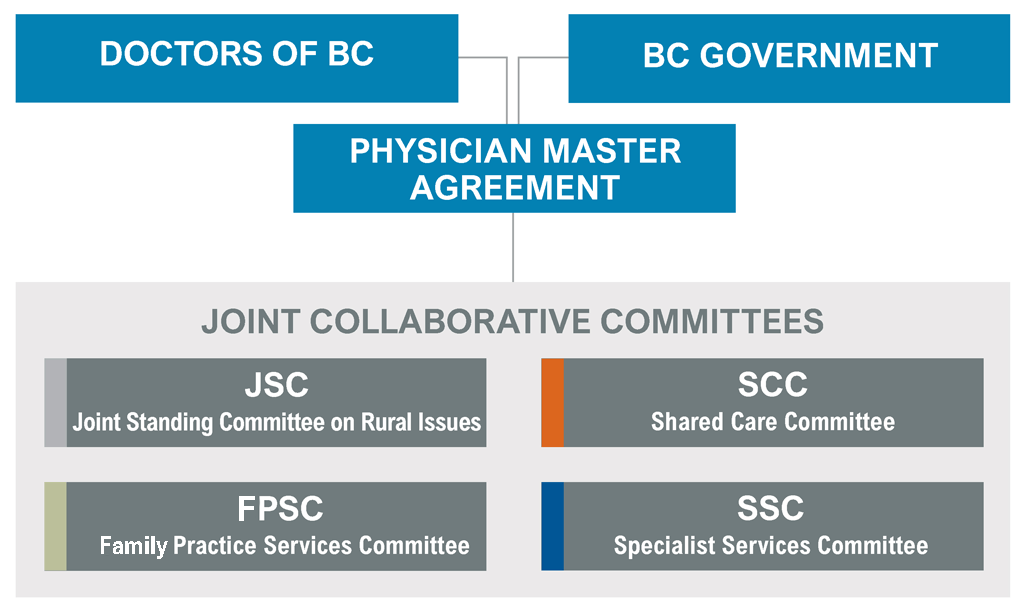
The General Practice Services Committee (GPSC) was formed in 2002 and first met in January 2003 to begin as a trial effort to improve patient care and physician satisfaction in BC.

At the time, a dwindling number of BC’s medical school graduates were choosing family medicine as a career and a bulging number of GPs were nearing retirement.

The committee of four representatives from the BCMA and four from the BC Ministry of Health began looking for new ways to address the mounting problems of low morale and decreasing professional satisfaction among BC’s full-service family practice physicians.

The GPSC’s first step was to develop a range of new incentive payments in support of full-service family practitioners. The committee then held Professional Quality Improvement Days (PQIDs)—province-wide consultations -- with over 1000 GPs to hear their concerns, identify areas of family medicine that needed support, and get recommendations on how to support GPs.

Four priorities were identified:

  • value us
  • train us
  • support us
  • pay us

Six years later, the GPSC boasts more than 15 separate initiatives to improve the care patients receive and the way in which doctors deliver it. Through participation in these programs, a growing number of BC physicians are finding their way back to rewarding and efficient clinical practice.

The GPSC has four streams:

  • The Full-service Family Practice Incentive Program (FPIP), which administers a variety of projects, including the Divisions of Family Practice http://www.divisionsbc.ca/, shared care networks, compensation for complex care, chronic disease prevention and management, collaborative mental health care, and more.
  • The Practice Support Program (PSP), which offers focused training sessions for physicians and their medical office assistants (MOAs) to help them improve practice efficiency and to support enhanced delivery of patient care.
  • Divisions of Family Practice, which are community-based affiliations of family physicians working together to achieve common health care goals. This program was designed to improve patient care, increase family physicians’ influence on health care delivery and policy, and provide professional satisfaction for physicians. Visit www.divisionsbc.ca.
  • The Community Healthcare and Resource Directory (CHARD), which is a free, secure, web-based service for health care providers and their assistants that allows them to quickly and easily find information on approximately 6000 health care specialists, up-to-date versions of referral forms and procedures. patient eligibility criteria and instructions, and approximately 3000 publicly and privately funded services. Visit www.info.chardbc.ca.


With the help of GPSC initiatives, BC’s primary care physicians are better able to meet the growing demands of caring for an aging population with more complicated conditions, and learning more advanced, continually developing technologies and medical therapies.
Physicians are eligible to participate in GPSC incentive programs if they:

  • have a valid BC Medical Service Plan practitioner number (practitioners who have billed any specialty consultation fee in the previous 12 months are not eligible),
  • are currently in general practice in BC as a full-service family physician, and
  • are responsible for providing the patient’s longitudinal general practice care.

The GPSC is working hard to effectively allocate the approximately $800 million over six years that was earmarked for primary care in the 2006 Agreement. The committee continues to develop programs to enhance the pivotal role of primary care physicians. Our goal is to support both those currently on the frontlines of health care and medical students considering the specialty of family practice.


GPSC committee members


Dr Bill Cavers, BCMA, Co-chair

Dr Jean Clarke, BCMA

Dr George Watson, BCMA

Dr Brian Winsby, BCMA

Dr. Joanne Young, BCMA

Dr. Jeff Harries, BCMA

Ms Nichola Manning, Ministry of Health, Co-chair

Ms Kelly McQuillen, Ministry of Health

Dr Garey Mazowita, Ministry of Health